Festivities can be so much fun, and parties provide opportunities for socialising and a little freedom for older teens. It is wonderful to be young! Encouragingly, it has been reported that teens today are making better choices with alcohol than previous generations. Yet I am often asked, “How much influence do parents have on teens, parties and alcohol consumption?”
A number of studies, in Australia, the US and the UK show more teens choosing not to drink, regardless of gender or socio- economic background. There are still some concerns in the UK where although teens appear to be drinking less than in the past. They are still getting drunk more often and consuming larger quantities of alcohol than many (but no all) of their European peers (see here and here.)
The effects of alcohol and binge drinking
Overall, although fewer teens are choosing to drink, among those who do, they are binge drinking at dangerous levels. With parties come late nights. The resulting tiredness can also alter the ability to make healthy decisions, particularly when alcohol is added to the mix. Given the detrimental effects of alcohol on the developing brain and the numbing fog that comes with consuming alcohol, we need to continue to warn young people about its dangers. Alcohol lowers inhibitions, which can make it more likely for teenagers to make risky decisions. Half of sexual victimisation incidents involve alcohol. We still see far too many acts of abuse and harassment occur during alcohol- soaked gatherings. One of my go-to experts on teen drug and alcohol education is Paul Dillon, the founder of DARTA (Drug and Alcohol Research and Training Australia). Paul wrote this excerpt for my book on teens, parties and alcohol,
“Certainly I believe that this is a generation that really wants to look after others, most particularly their friends.
Girls are more likely to ask for information on how to look after their friends, particularly when they are drunk. But in my experience boys are just as likely to assist in an emergency and are more likely to do it by themselves. Girls tend to operate in ‘packs’ and as a result, no one necessarily takes the lead and that’s where things can go wrong.
Unfortunately, young men’s attitudes toward alcohol are a reflection of what we see in the general community. Even though they truely care about themselves and their friends, when alcohol is added to the equation, their value system can change and their attitudes, particularly toward young women who like to drink, can be frightening.”
Given these detrimental effects, we need to continue to support teens in this area.
Teens, Parties and Alcohol
What difference do parents make on alcohol consumption?
A factor we now understand is that parents are one of the main suppliers of alcohol to young teen drinkers. It comes from the mistaken belief that providing their younger teenager with alcohol will help their child to drink ‘more responsibly’. It is wrongly assumed that because they ‘under supervision’ teens will then make better drinking choices when going out. This actually has the opposite effect. These teens tend to drink higher quantities of alcohol when out. I am also constantly surprised by the amount of times I hear about parents hosting a party and offering to purchase alcohol, on behalf of their teen’s peers. FARE – the Foundation for Alcohol Research & Education’s research found that, Australians continue to break the law and supply alcohol to underage drinkers. In the belief that there is little risk of detection or punishment.
“In Australia, almost 60 per cent of alcohol consumed by 12 to 17 year olds is supplied by adult friends, relatives or strangers, despite the fact that the provision of alcohol to young people under the age of 18 by someone other than their parent or guardian is in fact illegal in most Australian jurisdictions.”
The great news?
One of the game changers for the afore mentioned changes in teens alcohol consumption appears to be the reduction in parent supply. (See reports here and here). Many parents have also become aware of the risks of alcohol on the developing brain.
In Conversation
Modelling The place to start is by modelling healthy choices with alcohol ourselves. Openly talk about our family values and thoughts on underage drinking.
High school partiesIf your child is in high school (particularly around Year/Grade 9 in high school – 14 years old), it is a good time to start with discussions about alcohol at parties. Ask what they think they might do if offered a drink.
‘Safe outs’ Telling teens to ‘Just say no’ is very difficult for many to do in reality. Help them come up with scripts they could say, and come up with safe ‘outs’ for when they are in situations where drinking is involved. For example, they could make an excuse about having sport or work the next day and needing a clear head. Feign illness, hold the same drink all night, or volunteer to be the designated driver.
Code words It can be helpful for teenagers to have a “code” they can use with their parents. To be used use in a text or call, if they feel like things are getting out of hand. A word or emoji code that means, “Come and get me now, I need to be picked up”. This is something we’ve been talking to my own teens about for a long time. It gives teens a way to save face, so that if they feel like they need to leave they can do so.
Peer pressure Is and always has been a major factor in teens’ choices around alcohol. Positive peer pressure works too. So when teens hear about the negative effects of alcohol on their health and relationships, and that their generation is making better choices than ever with alcohol, they can (and do) make more informed decisions.
Share your own storyI tell teens about the time I was offered alcohol at a party when I was 14. The alcohol was bought and supplied by the parent, who often wanted to be seen as ‘the cool mum’. The power imbalance was enormous in having an adult encourage the young girls to drink. I spent the party walking around with the same can in my hand, pretending I had just picked up a new one. During the course of the night I slowly disposed of the contents into the indoor pot plants. Ideas and stories help teens think of creative ways to stick with their values, but also not feel embarrassed. They help teens realise they are not alone in choosing not to drink.
Remain firm but kind Stick with your boundary and remind yourself that this isn’t just an arbitrary rule. This is a safety and development boundary, which you are carrying out because you love your teen – not because you are trying to spoil their fun. Yet, remain kind and courteous in your reminder of this alcohol and parties rule. If your teen attempts to negotiate, state the facts, briefly remind them why the boundary is in place and then politely remove yourself from the situation if it is becoming heated.
Parties in your home: The Role Of Parents
Parties are an area where parents often feel that they have to back off and let teenagers have freedom. This is not the case! If you are hosting a party in your home, it’s important to stay visible and present. It is neither acceptable to play the role of BFF and turn a blind eye, nor for your teen to say to you “stay out of sight”. Besides the fact that it’s your home, having a group of under aged young people under your roof becomes a duty of care issue. There are usually many other parents expecting a responsible adult to be in charge and supervising. Sitting up in your room is not supervising. Too many young people are put at risk of peer pressure and sexual pressure when there is not supervision in place. Of course, ‘stalking’ is not helpful, but there are lots of creative and non-invasive ways that parents can maintain a presence amongst the teens. Perhaps, cook the barbecue, be in and out clearing cups and plates, fill up chip bowls, do the dishes in the kitchen, change a light bulb 😉 .
Dropping Off At A Party
If you are dropping off your young teenager at party or ‘gathering’, don’t be afraid to go and meet the hosts. This is especially true if you don’t know them. If your teen is embarrassed, perhaps let them go in first and then come along quietly behind. (Not in secret – so still being upfront with your teen, but letting them know you will wait until they have gone in). Forming a relationship with other parents goes a long way towards making sure that we extend our village and look out for each other’s teens.
Last thoughts
It is important that both parents, whether together or not, are on the same page in this area. This may take some compromising and discussion, but you need to remember your child’s safety is paramount!
Please support or encourage a parent, by sharing this article with them.
Collett Smart is a psychologist, qualified teacher, speaker and internationally published author. The heart of Collett’s work is to support and bring Hope to parents of tweens and teens. She lives with her husband and 3 children in Sydney, Australia. Find out more at www.raisingteenagers.com.au
by Collett Smart [This article is regularly updated]
Weekly news reports of traumatic images and stories of pain and destruction such as; natural disasters (bushfires, floods, volcanoes and earthquakes), the coronavirus, terrorist attacks, threats of war and shootings can cause great concern in children. Adults can sometimes assume that teens are coping with the overload of media reported trauma – while quietly – they are imploding.
This occurs, not only for those directly affected, but teens with a perceived threat of danger. In fact, for many teens, their imaginations (fuelled by sometimes unreliable social media reported trauma and constant stream of graphic images) can magnify the events to even greater levels of terror. Many parents, teachers, grandparents and carers become concerned about the emotional well-being of their children, and begin looking for advice on how to respond to questions from teens about recent upsetting events.
What are the signs that a young person might be struggling?
Look for a combination of some of the following:
sleeping problems, including nightmares, struggling to fall asleep, waking up during the night (you may need to specifically ask about this).
physical symptoms such as headaches, stomach aches or feeling ‘unwell’ in general.
not wanting to go to school or attend usual activities (sports, family/social events, use of public transport etc.) This could come from a fear of leaving a family member should something happens while at school. Or fear of something happening on public transport, or in a specific setting.
regressive behaviour.
changes in behaviour with teachers, carers, siblings and parents – becoming more withdrawn, tearful, aggressive or irritable than usual.
drop in performance at school.
In Conversation
The following ten tips are based upon Save the Children‘s years of experience (as well as other resources), and can be used as a guide for adults supporting young people who are not directly involved in the crisis (assistance for teens directly exposed to trauma is best sought from a professional). The relevancy of different tips will vary depending upon a child’s temperament, previous experience, age and where he or she lives.
Young people often ask the adults in their lives to explain what they have seen and to reassure them about what will happen next. The role of parents is still to ensure that their teen knows they are safe with you.
TEN tips on how to help teens process media reported trauma:
1. Turn off the news! Watching television reports or scrolling through images on social media may overwhelm tweens and teens. Overexposure to coverage of the events affects adults as well. Encourage screen limits, for a time, for both you and your teens. Process the information as you need to, but do your best to starve your news feed of the detailed stories, and begin again to focus on hope. This is not to ignore the facts, but our brains struggle to be in a constant state of ‘alarm’.
2. Listen to your tweens carefully, before responding. Get a clear picture of what it is that they understand and what is leading to their questions. Emotional stress results, in part, when a young person cannot give meaning to dangerous experiences. Find out what he or she understands about what has happened. Their knowledge will be determined by their age and their previous exposure to such events. Begin a dialog to help them gain a basic understanding that is appropriate for their age and respond to their underlying concerns (Hint – very often an underlying concern can be for personal safety or the safety of loved ones. Teens are also currently quite fearful about the future and the state of their earth).
3. Give reassurance and psychological first-aid. Assure them about all that is being done to protect children, animals and those directly affected by the crisis. Take this opportunity to let them know that if any emergency or crisis should occur, your primary concern will be their safety. Make sure they know they are being protected. Have 2 or 3 main steps you can verbalise, to indicate this.
4. Expect the unexpected. Not every tween or teen will experience these events in the same way. As young people develop, their intellectual, physical and emotional capacities change. Younger children will depend largely on their parents to interpret events, while tweens and teens will get information from a variety of sources – which may not be as reliable. Older teenagers, because of their greater capacity for understanding, may be more affected by stories. While teenagers seem to have more adult capacities to recover as well, they still need extra love, understanding and support to process these events. So be aware that, for some, their more general heightened emotion, moodiness or withdrawal may be a result of what they are trying to process (often they won’t even realise this).
5. Give your teen extra time and attention in age appropriate ways. Parents, don’t underestimate the power of your own nurturing.Children and teens need your close, personal involvement to comprehend that they are safe and secure. Talk, kick a ball, journal, make a hot chocolate, offer a hug and, most importantly, listen to them. Find time to engage in special activities with your teen.
6. Be a model for your teen. Young people will learn how to deal with these events by seeing how you deal with them. Base the amount of self-disclosure on the emotional and developmental level of each of your children. Explain your feelings but remember to do so calmly. Watch your own behavior. Make a point of showing sensitivity toward different countries, cultures and people affected by the disaster. This is an opportunity to teach your children that we are all part of one world and that we all need to support each other.
7. Help your teen return to normal activities. Young people almost always benefit from activity, routine and sociability. Ensure that your child’s school environment is also returning to normal patterns and not spending great amounts of time discussing the crisis in unhelpful detail.
8. Encourage your teen to do volunteer work (where possible). Helping others can give your teen a sense of control, security and empathy. Indeed, in the midst of crisis, adolescents and youth can emerge as active agents of positive change. Perhaps encourage your teen to help support local charities that assist children in need?
9. “Look for the helpers.” Despite the mass media attention to trauma and chaos, we need to remain mindful that there are often only a few evildoers involved in reprehensible incidents. Even in the face of natural disasters, the list of people willing to do good goes on and on, growing by the minute. We see it every time – people lined up, ready to do anything to help. Point them out to your teens – the local neighbours bringing food and making donations, the kind bus driver comforting a grandma, the police officers, the fire fighters, the animal rescue workers, anyone else you notice…
10. Look out for teens with a history of anxiety or depression. They can often be at increased risk, when they see bad news in the media, as the images they see and stories they hear, magnify their anxiety. These kids need a little extra patience and reassurance. Perhaps consider asking a school counsellor to chat with your child in the following weeks.
Last thoughts – Caring for survivors and their loved ones
For young people directly affected by this crisis (as well as those who have loved ones directly impacted in another area/city), parents should consider counselling. Not just for their teen, but also for the entire family.
Especially important to consider is that after a few weeks have gone by and the news moves on, onlookers tend to get on with their own lives and expect that those affected by the trauma, ‘Should be over it by now’. In fact, once the initial shock has passed and the reality has set in, it is at this time that nightmares, flashbacks and other symptoms of trauma can occur. This is the time to lean in and draw near.
Teachers and parents should be alert to any significant changes in eating habits, concentration, emotion/mood, sleeping patterns, sudden bed wetting, nightmares or frequent physical complaints without apparent illness. If present, these will likely subside within a short time, but without appropriate support and care they can become prolonged.
I strongly encourage you to seek psychological support and counselling.
Please support or encourage a parent, by sharing this article with them.
Collett Smart is a psychologist, qualified teacher, speaker and internationally published author. The heart of Collett’s work is to support and bring Hope to parents of tweens and teens. She lives with her husband and 3 children in Sydney, Australia. Find out more at www.raisingteenagers.com.au
Children who take part in family meals display less delinquency, greater academic achievement, improved psychological wellbeing, more positive family interactions and eat healthier foods.
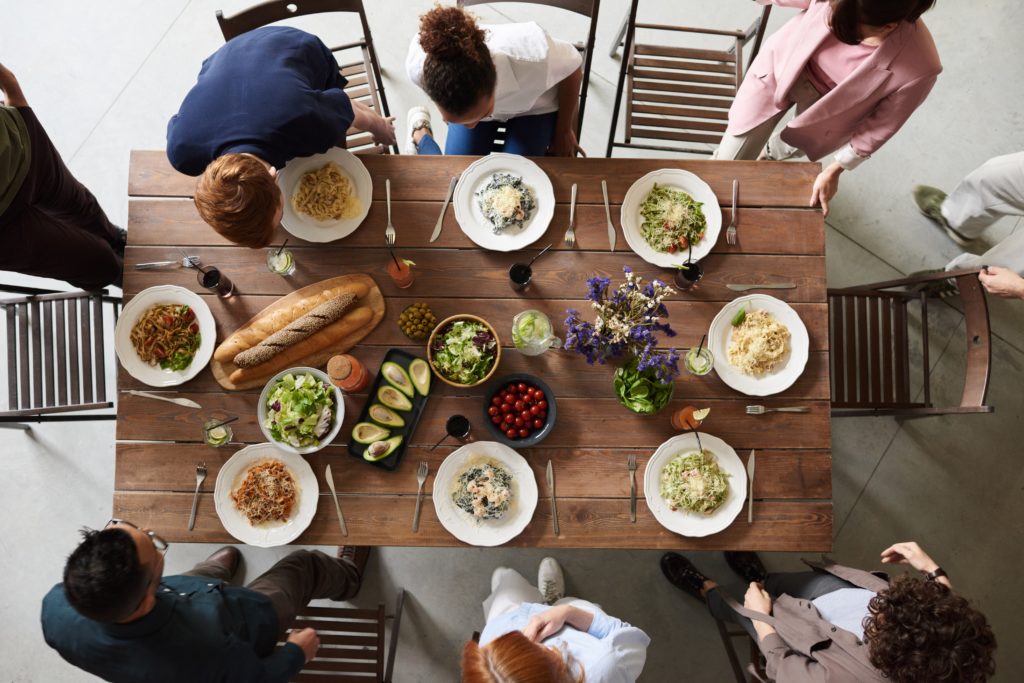
Eating meals together as a family has wonderful benefits. Frequent regular family meals (3–7 times a week) reflect a sense of family connection and priorities. It says, “We are important!”
Not a lot is known about exactly why family meals create benefits, but it is suggested that it might be due to the empathy, family cohesion, family attitudes and communication skills modelled or displayed during these times. The time together also generates feelings of closeness and comfort, providing a unique context to connect with your tweens and teens.
Although family meal time on its own is not a magic bullet for emotional health, evidence suggests that children who take part in family meals display less delinquency, greater academic achievement, improved psychological wellbeing, more positive family interactions and eat healthier foods (1).
This feels like another thing to add to the week – What should we aim for?
Start small
If you haven’t been doing ‘family meal time’, set a goal that is realistic and doable for your family. Perhaps you might try to have a family meal at least three times per week, even if some members can’t be there occasionally, due to part-time jobs, work schedules, sport or other activities.
A family meal also doesn’t need to be a formal affair. It could be lunch at the kitchen bench after school, a sandwich on your lap, an afternoon tea outside on the patio, or a Sunday picnic in the garden. The key factors include; no screens, the focus being on the people present, teens and adults all included in the conversation, for a designated period of time. The meal habit communicates that time together is important. It’s OK if some teens prefer to just listen, be present and don’t want to chat every time. It is the ‘being together’ that counts.
Gatherings
Another goal might be to include both children and adults at the table, or in a big circle of chairs, when family friends are over for a meal. This was demonstrated to me by friends who always pull together their two odd tables when people are over (waves to Kerrie). They ensure that adults and children sit at meals together. Children and teens are included in the conversation, get to watch how other families interact and also gain the benefit of incidental mentoring by being part of adults’ discussions. Teens don’t need to sit at the table for the entire social event, but are expected to stay for the duration of the meal.
Even when it’s mayhem
It’s normal to have the turning-up-of-noses at food, bickering or irritability some days -> um… did I mention the turning-up-of-noses? Families aren’t robots. These instances help parents to model saying sorry, how to empathise with the person who has had a bad day, to teach respectful communication and gratitude for what we have and what has been prepared. Gratitude and empathy are standouts, when teens have been part of preparing a weekly meal.
Some meal time conversation starter ideas, to try occasionally:
“List one good thing and one not very good thing that happened in your day.” It is vital that adults share some of their struggles as teens, in particular, often imagine that adults don’t have inner conflict.
“What do you think might help Dad deal with that difficult person at work this week?” Let teens help you brainstorm. Keep it age appropriate and don’t scoff at their suggestions.
“How did [that issue] you just spoke about make you feel today?”
“What did you enjoy most about your sport/flute/event this week?”
“Who is someone you are worried about at the moment?”
(insert your own here)
One last thought
Even if meal times don’t happen during busy periods, don’t beat yourself up. That’s just life and family and being human. Just pick up where you left off. There is so much happening within the fabric of meal times that it is worth fighting to keep this habit going in your home.
Do you have any advice for us, on how you tweaked your weekly routine to add in a family meal or two?
Please support or encourage a parent, by sharing this article with them.
Collett Smart is a psychologist, qualified teacher, speaker and internationally published author. The heart of Collett’s work is to support and bring Hope to parents of tweens and teens. She lives with her husband and 3 children in Sydney, Australia. Find out more at www.raisingteenagers.com.au
Adapted from Conversation #6 in Collett’s book, THEY’LL be OKAY: 15 Conversations to Help Your Child Through Troubled Times (Hachette, 2019). Another version printed at Mums At the Table.
As kids head to ‘school’ at desks and dining tables around the world, it is recommended that parents try not worry too much about content and time. Even here in NSW, where it looks like there might be a staggered start to face-to-face learning, the majority of term time will still be at home. In my last post, ‘When Schooling Comes Home’, I mentioned that your teen’s school-at-home day is going to be a lot shorter than the usual 6 hour school day. If you and your teen are struggling a little, educators recommend focussing on the basics – maths and literacy.
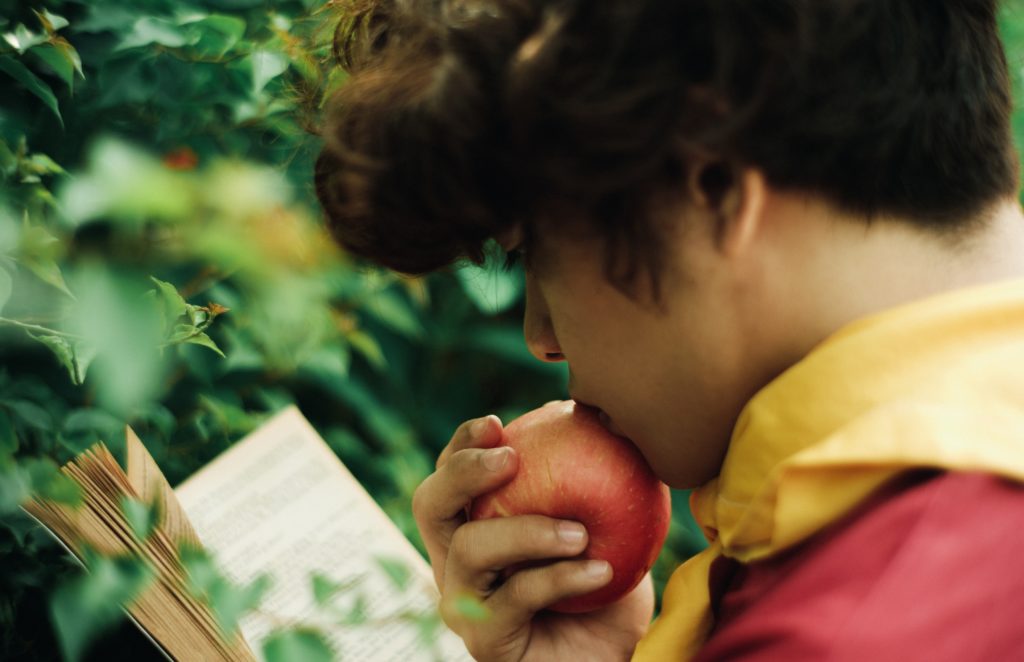
My son’s teacher recommends 20 mins of free reading time, as part of his online ‘curriculum’ each day. During this time my tween curls up on the couch with the latest of whatever book series he is reading.
I am always trying to find book recommendations for boys. So I thought I’d call on an expert on this topic. Allison Tait is an internationally published bestselling author of middle-grade adventure series books. She is also the mother of boys. Here she gives us 30 books for boys aged 13, 14 and 15.
The Most Common Question about Boys and Reading
One of the biggest challenges facing parents of tween and teen boys is how to keep them reading. How do I know this? Because they tell me.
As the co-admin (with authors Megan Daley and Allison Rushby) of the Your Kid’s Next Read Facebook group, a community with 11,000+ members – and counting – I am privy to the daily updates and queries of parents, carers, teachers, booksellers and various other participants.
And the ‘my son, aged 13, has stopped reading’ or ‘my son, aged 15, has lost all interest in books’ variety of question is among our most popular.
I also know because the number one search query that brings visitors to my own website (allisontait.com) is ‘great books for 13-year-old boys’ or its cousin ‘great books for 14-year-old boys’.
So clearly there are lots of parents out there looking for great books for their tween and teen readers.
I’m also mother to two boys – now aged 16 and 13 – so I have seen firsthand what happens when books have to compete with sport/school/screens/girls for time.
My boys are very different readers
The older one (aka Book Boy) has been a voracious reader since he could first make his way from one sentence to another. He even ran his own book review blog (bookboy.com.au) for four years. But he’s in year 11 now and the volume of schoolwork plus a budding career as a singer/songwriter has slowed him down a tad.
The younger one (Book Boy Jr) would much rather run. But he still reads. We worked hard to instigate a reading habit with him – 20 minutes in bed each night (pretty much the only time he is quiet) – and it continues to pay off.
He starts a lot of books and only finishes the ones that really grab his attention, and that’s okay. (As an author, I take particular note of those books and read them myself!)
So, I guess what I’m saying is that I feel your pain.
The Key to Breakthrough
What I’ve discovered, though, is that the key to breaking through the ‘reading ennui’ of this age is finding the right book – and that you might be very surprised by what that right book is!
Don’t Rule out Books
I nearly fell over when Book Boy Jr brought home an entire novel written in verse. I would never have considered giving him a book like that, but he saw it in the school library (kids need school libraries, just saying) during Quiet Reading Time, picked it up and liked it so much he brought it home and devoured it.
Don’t discount a book because it has a female main character, or because it’s written by a woman, or because it’s not the type of book your young reader has ever read before.
“I read books that are ‘for girls’ or aimed at girls (or books with girl protagonists) because a good book is a good book, no matter who the target audience is.”
Anyway, I’ve found that the best way to find books for boys in this age group is to ask other boys in this age group for recommendations.
So here are 30 books, tried-and-tested by boy readers this age
Allison Tait (A.L Tait) is the author of two epic adventure series for boys (and girls) aged 9-99, THE MAPMAKER CHRONICLES and THE ATEBAN CIPHER novels. Find out more about Allison and her books here.
Instead of banning screens, we need to help our tweens find a healthy balance.
Nature is known to provide cognitive benefits and enhance our overall physical and mental wellbeing. Yet, for some tweens, spending too much time on technology, sees them not getting enough exercise or spending enough time outdoors. So how do we help our young people create a healthy screen time balance?
How much screen time is too much?
That is the question I get asked at every seminar I run. The answer – “It depends!”
There is no easy answer to how much time your child should be allowed with technology, because not all screentime is equal. So I interviewed both Professor and psychologist Wayne Warburton and psychologist Jocelyn Brewer on my podcast (here), about the concept of ‘Digital Nutrition’. Jocelyn reframes ‘screen time balance’ as, ‘Digital Nutrition’, This is what she has to say,
‘Imagine that apps and games came with nutritional labels to help us understand their impacts. Imagine we considered the way we consume digital content the way we have learned to consider food and it impacts on our wellbeing. Imagine that we understood the ‘virtual vitamins’ contained in the activities we engage with online and made choices from a more informed perspective.’ (See more on her work here).
So instead of banning screen time, we need to help our young people to critically consider their screen content, as well as to engage in healthy, enjoyable physical activities.
Start by setting a clear screen time plan
Include structure around when and for how long your tween and teens can use entertainment media, such as online games and movies, as well as social media. Also, add suggestions for offline activities. Your plan should also include consideration for controlled access by a parent for younger teens, age restrictions for games and movies, as well as natural consequences for overstepping the boundaries.
Some boundaries might include:
A balance of screentime and ‘green time’ (literally seeing nature) activities. For example, perhaps encourage tweens to spend one hour outside after a one-hour session on a screen (in the garden, at a park, kicking a ball, jumping on a trampoline).
Thinking about healthy online places to hang out.
Non-screen entertainment options (board games, reading a book, playing an instrument, dancing, cuddling pets, art, swimming…).
Developing a mix of face-to-face socialising opportunities (at sport, music lessons, youth group, scouts, family dinners etc…).
A list of daily physical activity. It is recommended that teens aged 13–17 years engage in at least 60 minutes of moderate to vigorous intensity physical activity every day, irrespective of cultural background, gender, socioeconomic status, and ability.
Devices need to be in a shared visible place in the home, and ensure that all technology (including your teen’s phone) is out of bedrooms at night (this is a VITAL part of healthy tech habits).
Agreed bedtimes per age, with screens switched off around one to two hours before bed (to calm overstimulated brains).
Get your tweens and teens involved in creating the (above) list, as soon as they get their own devices (phone, iPad, laptop, Xbox etc…) Tweens are often more inclined to stick to a plan they feel they were part of creating. Of course, you are the parent, and so some things will be non-negotiable. Put this up as a tangible list on the fridge if your child needs reminding.
Collett Smart is a psychologist, qualified teacher, speaker and internationally published author. The heart of Collett’s work is to support and bring Hope to parents of tweens and teens. She lives with her husband and 3 children in Sydney, Australia. Find out more at www.raisingteenagers.com.au
Collett was the Resident Psychologist for Mums At The Table TV and Magazine, where a shorter variation of this article is posted.
The exam period is a time we can model compassion and empathy.
Exam time can be a stressful period for the whole family. I’m thinking ‘first year of High School’ exams, the bigger ‘final years of school’ exams and the ‘end of each year’ exams in general. Some teens adjust to a study routine quite easily, others find it tricky every single year. Each child is different, even in the same family. Most parents are keen to find some high school exam support tips.
As parents and carers there are lots of small things we can do to practically help our teens during this time.
Here are my Top High School Exam Support Tips:
Try to maintain realistic expectations. By this stage parents know what their children are truly capable of.
Keep it in perspective
I find that some students and even parents place different amounts of emphasis on the exam ‘event’. Try to keep in mind that exams are not the only thing happening in a teenager’s life. They’re still enrolled in sports or other activities, navigating friendships, juggling new jobs. It’s good for them to maintain healthy connections and activities, between study times, even if times are adjusted slightly. It also helps with planning and time management, which are long term life skills.
It is also good to encourage independence, but we sometimes assume that teens know how to study, when in fact no one has ever given them any guidance. Look out for this and then support your teen in getting small habits going from the start of high school.
Teens with ADHD or other learning challenges will often still need adult guidance with study timetabling and routines throughout school.
Practical support ideas
Help your teen to choose a study space. Preferably somewhere quiet. Discourage sitting on their bed to study. Their brain needs a good place to rest at night and beds need to be associated with sleep rather than study.
Start a good practice in the early years of encouraging set breaks from social media and phones. Although, allow for some times they can still check in with friends online, as friends provide much needed support during stressful periods.
Encourage teens to eat some balanced meals. If you are able, have some healthy snacks within reach. Provide a good healthy breakfast on exam mornings so that they have fuel in the tank to help their brain concentrate.
Discourage caffeine intake. Some teens try to stay awake by drinking lots of coffee or energy drinks. This often has more negative effects like causing digestive problems and wreaks havoc with sleep patterns.
Encourage good sleep hygiene practices. I know we know this as adults (isn’t hindsight wonderful?) , but cramming just creates more stress and less rest time. 9+ hours of sleep in the teen years is vital for the brain to actually process the information learned and lay it down into the long-term memory.
Don’t stop all sport or physical activity at this time, as exercise increases oxygen to the brain and also reduces stress. It’s a really healthy downtime activity between study periods.
Emotional support ideas
Remember that exam time is often very emotionally charged. Expect that your teen may be more sensitive and emotions may be a little raw, due to stress. Try not to over-react to small issues. Extend some grace (us adults get like this too when we are under pressure).
Avoid conflict over minor matters, like when they forget to pick up their socks or leave a bag at the door.
Extend kindness and make some concessions around housework or chores during this time. In our house we try to model that we all help each other out during pressurised periods in life.
Remind yourself (and then your teen) that most people are not good at everything or every subject. That’s ok. It’s what makes us all unique.
Highlight the strengths and successes that your teen has achieved over the last few years. Of course, we can all grow in other areas, but resilient kids work well drawing on their strengths, not over analysing their weaknesses.
Bring them warm or cool drinks and even a few of their favourite study snacks.
Continue to hug and affirm your teen.
When you have a Final Year High School Student
I’ve gone through this year twice as a parent. I have one left to go! It is a big year emotionally, for many, no matter how much we try to downplay the pressure.
Young people are not only anxious about their final results, but this is a time when there is a lot of pressure on them to ‘know’ what they want to do in the future. Most still don’t. That’s ok. Some take a year or two to find what they love.
They’re excited to leave school, but they are also nervous – even if they don’t show it. They will still need our support a great deal in the year or so after school (just in different, not smothering, ways).
In my ‘final exam’ episode of the podcast [here], I mention how I often say to my undergrad students, “Just get on a path and keep moving forward. You’ll new meet people and find new exists onto new pathways that interest you along the way, but you can’t discover new options if you’re stationary.”
Talk about how proud you are that they have made it to their final year of school.
Remind your child that this is only a short period in their lives, so just doing the best that they can do is what is important. This is not to minimise the importance of the discipline of studying for their final exams but recognising it is only ONE pathway to their future.
Teacher, Nicole Maxfield-Carr advises, “In the lead up, look at positive job options which do not require a degree or trade. If other interests are catered to there is not so much pressure. Talk about how proud you are that they have made it to this point. Let them know that a perfect grade does not equal a perfect life.“
For today’s generation there is a very strong possibility that what they study will not be the career they end up in. Ashely Fell from McCrindle Research reminds us that this generation of young people is likely to have 18 different jobs in their adult lifetime.
But what if they bomb out and they really don’t get the results they wanted?
Talk about options even before results come out!
Focus on their strengths.
When results come out, focus on what they have achieved and remind them again that there are many avenues to get to the career they would like.
Take time to reassess the situation and other possible options.
If they are disappointed, begin seeking advice and visit a career counsellor fairly quickly, so that your child can gain perspective.
Final Thoughts
School is an important place in all our lives, but some teens find it more stressful than others. Our job is to help our children learn responsibility but also to model compassion and kindness when things are tough!
P.S. You do not need to ask for permission to share this article with your school. I just ask that you acknowledge the source. Thank you.
Here is my podcast on this topic👇. I’d love it if you had a listen and shared it to support another parent of a teen.
Collett Smart is a psychologist, qualified teacher, speaker and internationally published author of, ‘They’ll be Okay: 15 Conversations to help your child through troubled times’. The heart of Collett’s work is to support and bring Hope to parents of tweens and teens. She lives in Sydney, Australia and is married with 3 children. Find out more at www.raisingteenagers.com.au
Raising Teens is a place where you will find current psychological research on teens and tweens, in practical terms. It also has information and links to well-known experts, on adolescent development, so that you can get on with the job that you do best. That is – supporting, connecting with and loving your teen.
Follow
The Raising Teens Podcast
On Spotify:
On Apple podcasts:
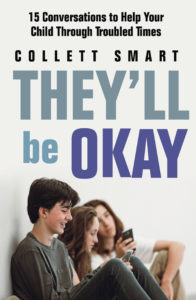
THEY’LL be OKAY!
THEY'LL be OKAY! - Australia/New Zealand Edition
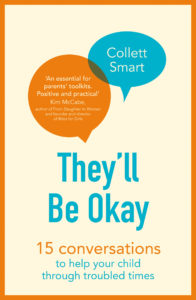
THEY’LL be OKAY! International
Available in the UK, Europe & Commonwealth (excl. Canada)
Conversations with Teens
About the Author
My name is Collett Smart. I am a psychologist, qualified teacher, speaker, podcaster and internationally published author, with more than 25 years experience working in private and public schools, as well as in private practice. I am married and have 3 children aged aged 22, 20 and 14 years-old.
Welcome to Raising Teens!






 Holes by Louis Sacher
 The Skeleton Tree by Iain Lawrence
 The Hate U Give by Angie Thomas






 My name is Collett Smart. I am a psychologist, qualified teacher, speaker, podcaster and internationally published author, with more than 25 years experience working in private and public schools, as well as in private practice. I am married and have 3 children aged aged 22, 20 and 14 years-old.
Welcome to Raising Teens!
My name is Collett Smart. I am a psychologist, qualified teacher, speaker, podcaster and internationally published author, with more than 25 years experience working in private and public schools, as well as in private practice. I am married and have 3 children aged aged 22, 20 and 14 years-old.
Welcome to Raising Teens!